
Thank you! Your submission has been received!
Oops! Something went wrong while submitting the form.
April 15, 2026
You finish a deposition and breathe deeply. Hours have passed, and you got what you needed. Maybe.
Later, when you finally review the transcript, something catches your eye. An answer doesn’t quite line up. A detail sounds different from what you remember. You read the exchange again and realize what happened.
You should have followed up.
The question is: would you have caught it if you had seen it in the moment?
Depositions demand constant attention. You’re listening closely to the witness, watching how they respond, thinking through strategy, managing time, and planning your next question, all at once.
When your brain is juggling that many things, small details can slip by. A witness says something that deserves another question, but your focus has already moved to the next line of questioning. You only notice later. Sometimes that’s harmless. Sometimes it isn’t. Because the most valuable moment to clarify testimony or close a gap is while the witness is still under oath.
Once the deposition ends, that opportunity may be gone.
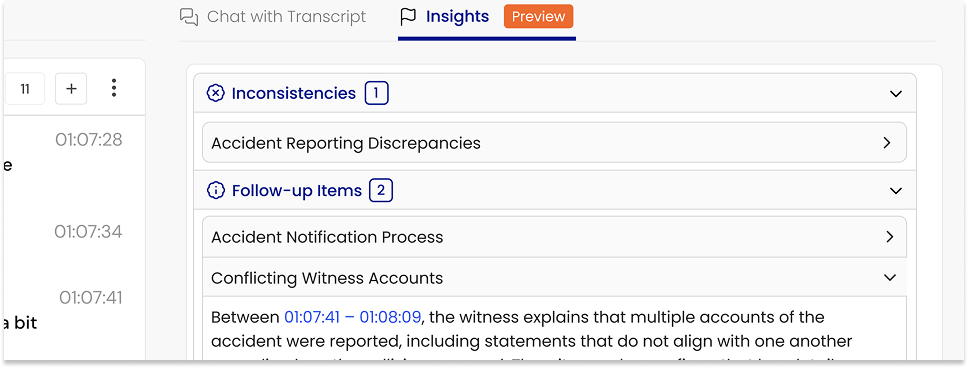
That experience is exactly why we built AI Insights. AI Insights reviews the transcript and highlights moments that may deserve a closer look. Instead of combing through pages of testimony after the fact, it helps surface details while the deposition is still happening or shortly after.
It organizes what it finds into three simple categories:
The goal isn’t to replace your judgment or change how you conduct a deposition. Strategy, tone, and questioning will always belong to the attorney in the room.
AI Insights simply helps surface details that can be difficult to spot while you’re managing everything else happening during testimony.
Think of it as a quiet second set of eyes reviewing the record while you focus on questioning the witness.
If you’re using RealTime, AI Insights can be updated while the deposition is happening.
During a break, you can:
One litigator described it this way:
“I would update it intermittently during breaks. The questions it formed were good reminders to touch on after a line of questioning.”
That’s exactly the role it’s meant to play. Not flashy AI. Not legal theory. Just a practical reminder system when your attention is pulled in several directions at once.
Depositions are one of the most important opportunities to shape your case. Transcripts are commodities, but deposition intelligence is not. They also move quickly, and the reality is that even experienced litigators can miss a detail in the moment.
AI Insights helps bring those moments into view sooner while you still have the chance to address them. Instead of discovering issues later during transcript review, you can identify them earlier and decide what to do with them.
Because when the witness leaves the room, the record is already written. And the best time to fix a gap is before the deposition ends.
